


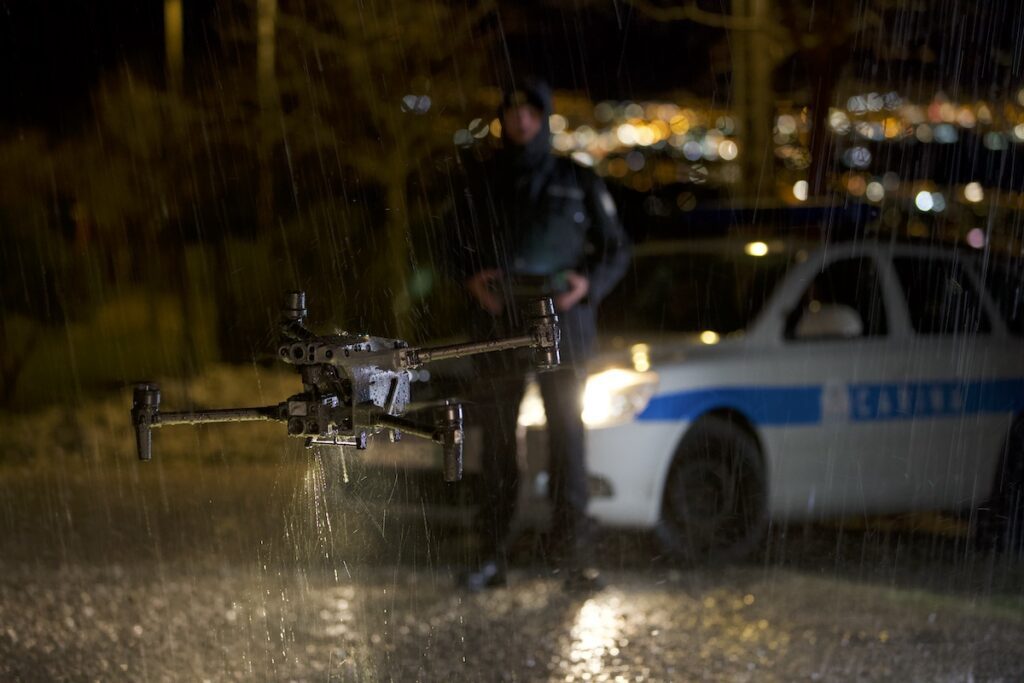
Congresswoman Elise Stefanik, joined by China Select Committee Chairman John Moolenaar (R-MI), and Congressmen Darin LaHood (R-IL) and Rob Wittman (R-VA), has reintroduced the Drones for First Responders (DFR) Act. (Read the full text of the bill here.) The legislation is designed to strengthen the U.S. drone industry, reduce reliance on Chinese-manufactured drones, and enhance national security by supporting the transition to domestically produced and allied-nation drones for public safety and critical infrastructure operations.
Key Objectives and Rationale
The DFR Act responds to concerns about the dominance of Chinese-made drones—particularly those from companies like DJI—in the U.S. first responder market, where they account for an estimated 90% of deployed systems. Lawmakers and industry leaders argue that this dependency poses significant surveillance and cybersecurity risks, as highlighted by Department of Defense certifications and recent federal security bulletins. The Act is positioned as a strategic measure to counteract what sponsors describe as unfair trade practices and potential national security threats linked to the Chinese Communist Party’s (CCP) control of the global drone supply chain.
Core Provisions of the DFR Act
-
Tariffs on Chinese Drones: The bill imposes a new tariff regime on drones manufactured or controlled by entities in the People’s Republic of China (PRC). Tariffs start at 30% and increase by 5% annually, aiming to level the playing field for U.S. and allied manufacturers and to discourage continued reliance on Chinese drones.
-
Revenue-Neutral Grant Program: Revenue generated from these tariffs will fund a grant program for first responders, critical infrastructure providers, and farmers. The program is designed to offset the cost of transitioning to drones manufactured and assembled in the U.S. or allied countries, ensuring that public safety agencies are not financially disadvantaged by the policy shift.
-
Strengthened Rules of Origin: By 2030, the Act requires that drones imported into the U.S. meet stricter rules of origin, ensuring that critical components are not sourced from China, further incentivizing the development of a secure and resilient domestic supply chain.
Industry and Policy Context
The U.S. government has increasingly scrutinized the security implications of Chinese drone technology. Federal agencies, including the Department of Defense and the Cybersecurity and Infrastructure Security Agency (CISA), have issued warnings about the risks associated with foreign-manufactured drones, particularly regarding data privacy and potential espionage. The DFR Act builds on previous legislative efforts, such as the National Defense Authorization Act’s restrictions on certain foreign UAS.
Supporters of the Act argue that the bill provides a necessary incentive structure to incubate new manufacturing capacity, support American jobs, and secure sensitive data and infrastructure. They emphasize that the approach is incremental, allowing for a transition period rather than an immediate ban, and is designed to avoid abrupt disruptions to public safety operations.
Stakeholder Perspectives
Congresswoman Stefanik says:“My legislation will establish a revenue-neutral grant program to help Americans purchase drones securely made by the U.S. and our allies… [It] will increase the competitiveness of U.S. drone manufacturers and provide first responders with the secure, high-quality drones they need to protect and serve our communities.”
“Chinese drones pose an unacceptable surveillance risk… ,” said Chairman Moolenaar. “This is about protecting our communities, rebuilding American manufacturing, and cutting off the CCP’s access to sensitive data.”
Potential Impact and Criticism
While the Act is broadly supported by national security advocates and domestic drone manufacturers, some industry groups and public safety agencies have raised concerns. Critics argue that the tariffs could increase costs for small agencies and hobbyists, potentially limiting access to life-saving technology and reducing market choice in the short term.
DJI users have also expressed concerns about the pace of domestic manufacturing scale-up and whether U.S. and allied suppliers can meet the operational needs currently fulfilled by Chinese-made drones.
Summary of the Bill’s Text
According to the full bill text, the DFR Act:
-
Defines “covered foreign entity” as any entity subject to the jurisdiction or control of the PRC, or any entity on the Department of Commerce’s Entity List.
-
Establishes a schedule of increasing tariffs on covered drones, with proceeds directed to a grant fund for eligible U.S. and allied drone purchases.
-
Details eligibility requirements for grant recipients, prioritizing first responders, critical infrastructure operators, and farmers.
-
Sets forth compliance requirements for grant-funded drone purchases, including NDAA compliance and prohibitions on PRC-origin components after 2030.
-
Directs the Department of Homeland Security and Department of Commerce to oversee implementation, reporting, and enforcement.
The reintroduction of the Drones for First Responders Act marks yet another effort to limit reliance upon Chinese drones. If enacted, the legislation would accelerate the transition away from Chinese-manufactured drones, incentivize domestic innovation, and strengthen national security safeguards for drone operations in critical sectors. However, its success will depend on the ability of U.S. and allied manufacturers to deliver competitive, reliable alternatives—and on balancing security imperatives with the operational needs of America’s first responders.
Read more:
- First Responders Oppose Inclusion of Countering CCP Drones Act in NDAA
- Increased Tariffs on Chinese Drones and the “Drones for First Responders Act” Perspective from Skyfire Consulting
- NDAA FY25: Key Takeaways for the Drone Industry


Miriam McNabb is the Editor-in-Chief of DRONELIFE and CEO of JobForDrones, a professional drone services marketplace, and a fascinated observer of the emerging drone industry and the regulatory environment for drones. Miriam has penned over 3,000 articles focused on the commercial drone space and is an international speaker and recognized figure in the industry. Miriam has a degree from the University of Chicago and over 20 years of experience in high tech sales and marketing for new technologies.
For drone industry consulting or writing, Email Miriam.
TWITTER:@spaldingbarker
Subscribe to DroneLife here.